Why free music promotion is still real work
Free music promotion doesn't mean zero effort. It means you trade money for time, consistency, and a bit of patience. When you have no budget for ads or paid services, your most valuable assets are your existing network, your creative output, and your willingness to show up regularly.
Think of it like this: every free method in this guide costs you hours, not dollars. That's not a bad trade if you use those hours wisely. The artists who succeed without spending money are the ones who treat promotion as a habit, not a one-off burst before a release.
SebastianLoveInc Insight: The most consistent free promoters don't chase every tactic. They pick a few that fit their strengths and repeat them until they see traction.
Before you start, set realistic expectations. Free promotion rarely goes viral overnight. It builds slowly, but it builds a foundation that paid promotion can later amplify. If you're just starting, focus on one or two channels you enjoy using—you'll stick with them longer.
Start with Spotify for Artists: the free tools you already have
Spotify for Artists is free, and it's the backbone of any free Spotify promotion strategy. It gives you access to your release stats, audience demographics, and the ability to pitch songs to editorial playlists up to seven days before release. That pitch is your only direct line to Spotify's curation team, so use it well.
When you pitch, be specific. Mention the mood, genre, and any interesting story behind the track. Avoid vague phrases like “this song is great.” Editors see thousands of pitches weekly; yours needs to stand out with clarity, not hype. Learn more about the process in our guide on how to pitch to Spotify editorial playlists.
Beyond pitching, Spotify for Artists lets you see which playlists are driving your streams. Use that data to find similar independent playlists to target manually. You can also customize your artist profile with a bio, photos, and featured playlists—all free ways to make your page more engaging.
Free playlist pitching: direct outreach that works
Editorial playlists are great, but independent curators run thousands of playlists that can give you real exposure. Finding them takes time, but it's free. Search Spotify for playlists in your genre, note the ones with active followings and fresh adds, and look for contact info in the playlist description or the curator's social profiles.
When you reach out, keep it short and personal. Mention why your song fits their specific playlist, not just “I love your playlist.” Include a link to your track, and ask if they'd consider adding it. Remember, curators are often artists themselves—they appreciate respectful, concise pitches.
For a deeper look at what curators want, read how playlist curators choose songs. You can also use free tools like Spotify's own search filters to find playlists by size and genre. Avoid services that promise placements for a fee—many are not transparent about their methods. If you're considering paid options later, our placement or your money back policy explains how a legitimate service should work.
Use your social channels and email list without spending a cent
Your social media followers are your first audience. They already know you, so remind them you have new music. Post consistently, but don't spam. Share behind-the-scenes clips, lyrics, or short videos where you talk about the song's inspiration. Authenticity beats polish when you're starting out.
An email list is even more valuable because you own it. Platforms like Mailchimp or Buttondown offer free tiers for small lists. Send a simple announcement when you release a song, and ask people to save it or add it to their playlists. Email might feel old-fashioned, but it reaches people who actually care.
Don't forget to link to your Spotify profile everywhere: in your Instagram bio, YouTube descriptions, and even in your email signature. Every click counts, especially when you're trying to build early momentum.
Collaborate with other artists to cross-promote for free
Collaboration is one of the most effective free music marketing tactics. Find artists in your genre with a similar following size. You can collaborate on a track, but even a simple playlist swap or social media shoutout works. Each of you introduces your music to the other's audience, doubling your reach without spending money.
How do you find collaborators? Look at who appears in similar playlists or who engages with the same curators on social media. Reach out with a genuine compliment and a specific idea, not a generic “let's collab.” If you create a joint playlist, make sure it's well-curated and includes both of your tracks, plus others that fit the vibe.
Cross-promotion also works with non-musicians. Podcasters, video creators, and even local businesses might be open to using your music if you offer it for free. That can lead to new listeners who discover you in a different context.
Release Radar and algorithmic discovery: what you can influence for free
Spotify's algorithms—like Release Radar and Discover Weekly—are designed to surface music based on listener behavior. You can't control them directly, but you can influence them. The most important factor is early engagement. When you release a new song, encourage your fans to save it, add it to their playlists, and share it. The more saves and plays you get in the first week, the more the algorithm may decide to test your track with new listeners.
Consistent releases also help. If you put out music regularly, your followers' Release Radar will include your new tracks automatically. That's a free placement you don't have to pitch for. Learn more about how the algorithm works in our Spotify algorithm explained guide.
One thing to avoid: buying streams or using bots to fake engagement. Spotify actively filters fake plays, and it can hurt your chances of getting real algorithmic support. Focus on genuine reactions from real people.
Repurpose your content: one song, many formats
You don't need a video budget to create engaging content. One song can become a lyric video, a behind-the-scenes clip, a short teaser for social media, or a simple visualizer made with free tools like Canva or DaVinci Resolve. Each format reaches a different audience on different platforms.
For example, post a 30-second snippet on TikTok or Instagram Reels with a visual that matches the mood. Link to your Spotify in your bio. You can also create a short audio clip that you share on Twitter or Facebook with a “new music” message. The key is to make it easy for people to find and stream your track.
Repurposing also saves time. Record one video of yourself explaining the song, then cut it into multiple clips. Write one blog post about the release, then turn it into social posts. This approach keeps your promotion consistent without burning out.
Free tools and communities for independent artists
There are plenty of free resources to support your promotion. Canva for graphics, Audacity for audio editing, and free video editors like Shotcut are just a few. For distribution, some services offer free tiers that let you upload your music to Spotify and other platforms while taking a small percentage of royalties. Research your options carefully.
Online communities can also provide support and exposure. Reddit's music subreddits, Facebook groups for indie artists, and Discord servers dedicated to music promotion are places to share your work and get feedback. Be genuine—nobody likes spam. Participate in discussions, offer feedback to others, and you'll build relationships that can lead to playlist features or collaborations.
Just remember: free communities have rules. Read them before posting your music. Many have specific days for self-promotion, and respecting those rules builds goodwill.
What to avoid: 'free followers' and fake engagement traps
You'll see offers for “free Spotify followers” or “instant playlist placements.” Run the other way. These services often use bots, which can get your account flagged and your music removed from playlists. They might even ask for your password—never share that.
Fake engagement also destroys your credibility. A sudden spike in followers with no corresponding increase in actual listens looks suspicious to Spotify and to curators. It can hurt your chances of genuine playlist inclusion, because curators check engagement quality.
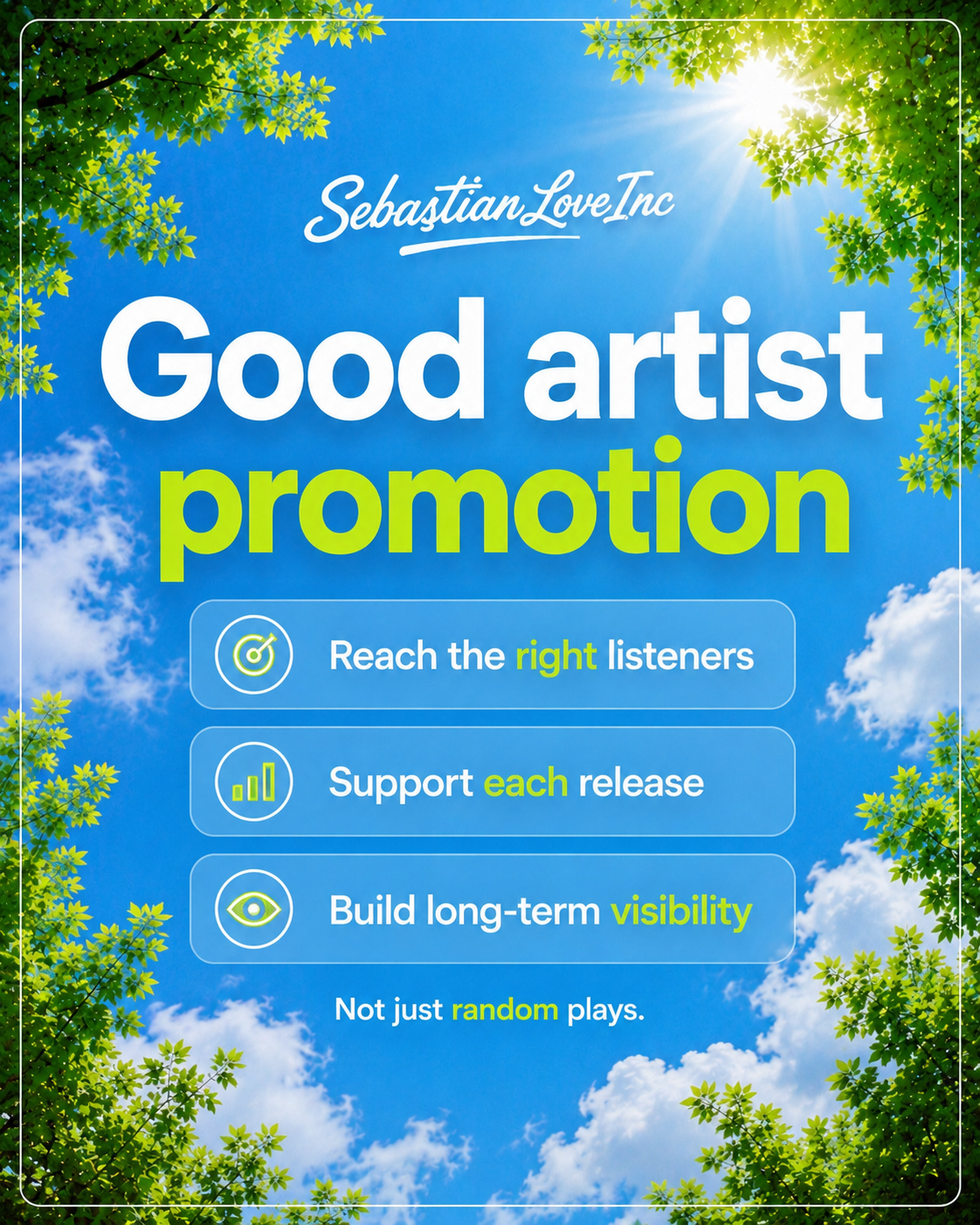
Instead, focus on building a small but real audience. Even 100 engaged listeners who save your music and come back for more are worth more than 10,000 bot followers. For a deeper look at what good promotion looks like, see our guide on what good artist promotion actually looks like.
Putting it all together: a simple free promotion plan
Free music promotion works when you have a plan. Here's a simple framework you can adapt:
- Before release: Pitch to Spotify editorial via Spotify for Artists, and send a personal email to your list.
- Release week: Post on social media daily, share the song with curators you've researched, and ask fans to save it.
- After release: Repurpose content, engage with new listeners, and analyze your Spotify stats to see what worked.
Consistency beats intensity. Doing a little every day is better than a frantic push that fades. If you're new to promotion, start with just two or three tactics from this guide and stick with them for a few months.
If you ever decide you want to invest money to speed things up, make sure you choose a service that's transparent. At SebastianLoveInc, we offer Spotify playlist promotion campaigns that are manual and targeted—no bots, ever. But we're honest: promotion can't guarantee streams or fame. It puts your music in front of the right listeners, and the rest is up to your art.